
Saturday, February 22, 2014
Immigrant Analysts and the Search for an Emotional Home
Papers on the subject of the immigrant analyst seem to have floated into my awareness in recent weeks. There was a chapter by Kirloff about the consequences for psychoanalysis in the UK from the immigrant analysts who arrived there fleeing from the Third Reich. A recent issue of Psychoanalytic Dialogues features papers by two very different analysts: Glenys Lobban - a white South African practising in New York and Dori Laub - a Holocaust survivor and trauma specialist, who has practised both in Israel and the USA. Now the International Association of Self-Psychology has sent out notices for their conference to be held in October this year in Jerusalem and lo-and-behold, the title is: "Where Do We Feel At Home?: Self Psychological Perspectives of Belonging and Not Belonging".
It seems the time has come for me to reflect on my own immigrant experience as a therapist, both in the UK and then when I returned to South Africa (which was both a homecoming and an immigration after 32 years away). Glenys Lobban uses the term "double consciousness" coined by W.E.B. Du Bois, to describe her experience of the multiple selves the immigrant has to negotiate in her new country. Among them was the position of both simultaneously being inside her own experience of foreignness and seeing herself and her foreignness through the eyes of someone living in her new host country - “the sense of always looking at one’s self through the eyes of others”. The keyword here is "always". Just in order to survive, an immigrant does need at times to perceive themselves and their culture as others see them. (I would call this an "assimilating self"). But to be always having to do this and for it to be through the negative lens of racism - this is what I think was meant by "double consciousness".

Saturday, June 8, 2013
"The Possibility of Love"
My title is a quote from Jeannette Winterson's wonderful memoir "Why be Happy When you Could
be Normal?" She writes about her relationship with her adoptive mother, Mrs Winterson and her ultimately successful attempt to find her biological mother. It is also in my opinion, an extended love letter to her lover Susie Orbach, with whom she started a relationship as she was writing this book. She says in the memoir that in response to Susie's bestseller: "The Impossibility of Sex", (which she read before she met her), she had thought of writing a book called "The Possibility of Love." And this is partly what her book is about.
It made me think about the different ways we can express love and how the digital age gives us even more possibilities. About 30 years ago, Nancy Kline and Christopher Spence wrote "At Least a Hundred Principles of Love". Pity I didn't buy it when I could - probably a collector's item by now. I wonder whether attending the big events in one's family like weddings and important birthdays figured as a principle on their list? I somehow doubt it. But it certainly figures on the lists of some members of my immediate family! So when my brother who lives in London, recently celebrated an important birthday, it put me in a quandary I hadn't foreseen. My family knows me well enough and they excuse me when it comes to weddings (because I don't believe in marriage) or circumcisions (I boycott them!) but I can hardly muster a political objection to the birthday of a beloved brother. I spent a couple of days looking at flights and then my sister came up with a brilliant idea. We could collect memoirs and photos of my brother from family members and friends and compile a photobook as a surprise gift. It would be more lasting and memorable than turning up for a few days to attend a dinner and exchange a few pleasantries with cousins one hardly ever sees.
So I went into the organizing of this surprise with gusto. And my partner - who is a digital wiz - searched out photobooks online.
be Normal?" She writes about her relationship with her adoptive mother, Mrs Winterson and her ultimately successful attempt to find her biological mother. It is also in my opinion, an extended love letter to her lover Susie Orbach, with whom she started a relationship as she was writing this book. She says in the memoir that in response to Susie's bestseller: "The Impossibility of Sex", (which she read before she met her), she had thought of writing a book called "The Possibility of Love." And this is partly what her book is about.

It made me think about the different ways we can express love and how the digital age gives us even more possibilities. About 30 years ago, Nancy Kline and Christopher Spence wrote "At Least a Hundred Principles of Love". Pity I didn't buy it when I could - probably a collector's item by now. I wonder whether attending the big events in one's family like weddings and important birthdays figured as a principle on their list? I somehow doubt it. But it certainly figures on the lists of some members of my immediate family! So when my brother who lives in London, recently celebrated an important birthday, it put me in a quandary I hadn't foreseen. My family knows me well enough and they excuse me when it comes to weddings (because I don't believe in marriage) or circumcisions (I boycott them!) but I can hardly muster a political objection to the birthday of a beloved brother. I spent a couple of days looking at flights and then my sister came up with a brilliant idea. We could collect memoirs and photos of my brother from family members and friends and compile a photobook as a surprise gift. It would be more lasting and memorable than turning up for a few days to attend a dinner and exchange a few pleasantries with cousins one hardly ever sees.
So I went into the organizing of this surprise with gusto. And my partner - who is a digital wiz - searched out photobooks online.
Thursday, January 31, 2013
Why We Need a Language for Ethical Power

That evening some members of the audience fully expecting to get heated at hearing another self-hating Jew, found themselves inexplicably calmed and soothed by Beinart's rootedness in Jewish religion and culture as well as his sensitivity to the priorities and fears within the Jewish community.
He made one really potently illuminating point: Throughout Jewish history we have seen ourselves as victims and this is part of the problem in Israeli politics today. Our festivals - Purim, Pesach, Hannukah - have as their theme: We were attacked, We survived, Let's eat! It is a language of victimhood. We don't go on to relate the stories of how our ancestors did battle afterwards and slayed multitudes in revenge, for instance. We lack a language to talk about the ethical responsibility of Jewish power. This lack is reflected in Israeli politics too. A country that has the fifth largest army in the world and is a global arms exporter still sees itself as needing to behave with impunity because of its Holocaust history. He made a plea for a broader panoply of images than just those of Holocaust victimhood or of military triumphalism.
Can you think of any? Do you know of any countries (or philosophers) that have a language to talk about the ethical responsibilities of power? Do any of these ever practice what they preach?
Worcester Peace Train

I mentioned Deon Snyman and the Worcester Hope and Reconciliation Process in my last post. At the "Engaging The Other" conference in early December he talked about a whole group of survivors of the Worcester Shoprite bombing planning to visit one of the perpetrators, Stefaans Coetzee, in prison in Pretoria. Well, they didn't waste any time!
Sarah Crawford-Browne writes:
"Deon
is on an incredible journey with 40 survivors of the Worcester bomb -
24 Dec 1996. They left this morning (29 Jan 2013) on a Peace Train to go from
Worcester to Pretoria to meet one of the perpetrators. I'm putting up
the updates on the Restitution Foundation Facebook page as they travel. And
we invite you to join the Peace Train -- there's an event on the
page... or to share a posting so it does go viral and strengthens the
hope in our country! This
is a partnership between the Worcester Hope and Reconciliation Process
(they called Deon the father of WHRP today!) and Khulumani.
This newspaper article shares a little of the story... - as
does a video
about Ms Olga Macingwane who was the first to make the journey in 2009,
following which other survivors requested the opportunity to meet
Stefaans.
Friday, January 4, 2013
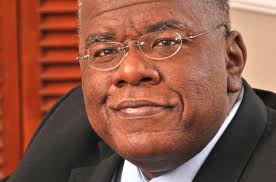
Engaging the Other
 |
| Pumla Gobodo-Madikizela |
 |
| Jonathan Jansen |
The University of the Free State
The first undoubtedly was the story of UFS itself and what Jansen has been able to create in 3 years.
Monday, December 3, 2012
A Slice of New York before it became the Big Apple
 |
| Gabriel Byrne as Paul Weston in In Treatment |
I lived in New York at the end of that so-called Golden Age - just before the Women's Movement and Gay Liberation started questioning all those seemingly incontrovertible psychoanalytic interpretations about us. In the space of a few years, the vaginal orgasm was declared a myth, the lived experiences of childhood were reasserted i.e. incest was not always a fantasy, homosexuals were not necessarily latent paranoiacs, nor lesbians castrating females and the designation of homosexuality as a perversion, was also eventually forced to bite the dust.
 |
| The New Left gets old! SDS veterans starting "New SDS" in 2006 |
Friday, August 10, 2012
Vignettes from ICP 2012

I chose to go to presentations connected with Human Rights issues and also some of the keynote debates and lectures:
- There was a so-called Controversial Debate between Mark Solms (who describes himself professionally as a neuro-psychoanalyst) and Barbara Wilson - a rehabilitative neuropsychologist. I have a huge respect for Mark Solms - he is a brilliant lecturer, has actually founded a new discipline which has brought him world recognition and has done amazing things on his Solms-Delta wine farm - and here comes the but - he started off the debate by telling Professor Wilson that he was frightened of her handbag!
Subscribe to:
Posts (Atom)